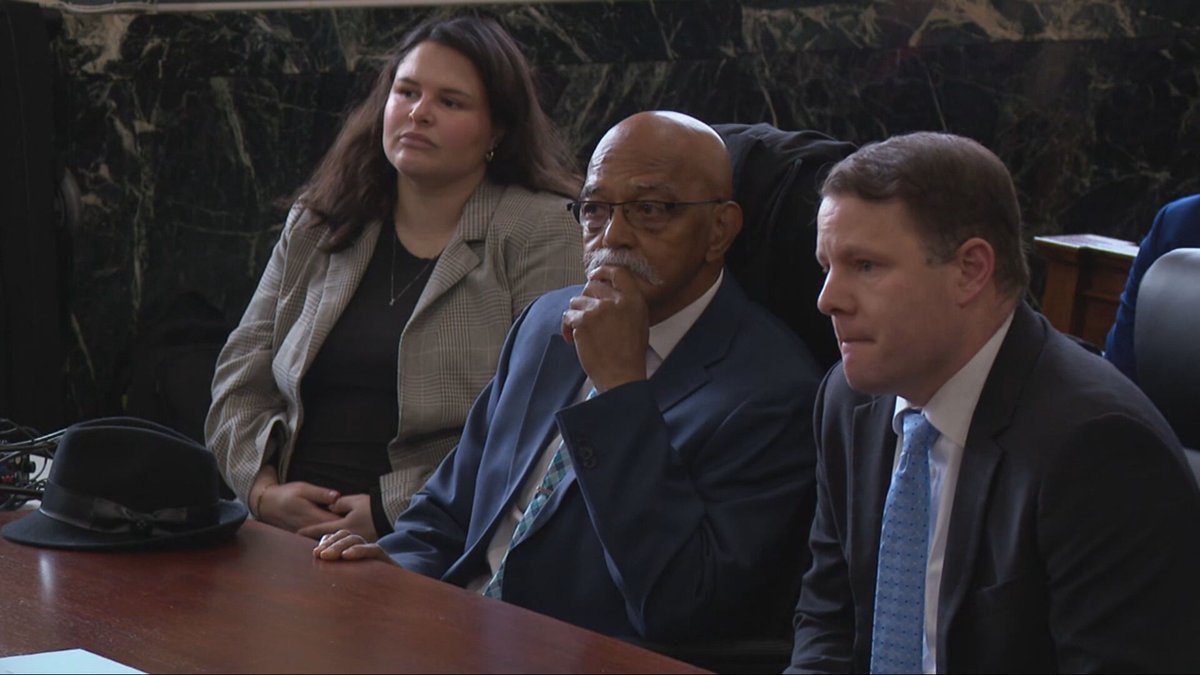
Elwood Jones, who spent 27 years on Ohio's death row for a murder he did not commit, filed a federal civil rights lawsuit Thursday, against the City of Blue Ash and several former police officers who investigated the case.
The lawsuit alleges Blue Ash detectives developed "tunnel vision" in the 1994 killing of 67-year-old Rhoda Nathan at the Embassy Suites hotel, focusing solely on Jones while ignoring other suspects, a reported confession by another person and a bloody handprint at the crime scene. It also accuses investigators of planting evidence and failing to preserve key materials.
None of the officers named in the suit remain on Blue Ash's active police roster.
What the lawsuit claims
At the center of the complaint is a pendant belonging to Nathan. According to the suit, a forensic scientist's initial search of Jones' vehicle found nothing of evidentiary value in a toolbox in the trunk. Blue Ash Officer Michael Bray later testified he discovered the pendant in that same toolbox during a second search. Nathan's son initially told investigators the pendant did not belong to his mother.
"There were a lot of things that the Blue Ash Police Department should have done they didn't. Things they didn't do they should have. Things that they did that were probably illegal, and part of it is, those acts or inactions caused him to lose 27-plus years of his life," Jones' attorney Jay Clark told Local 12 on July 30.
Bray has since died. In 2023, Judge Wende Cross ruled his testimony would be excluded from any retrial because Jones' attorneys did not have adequate opportunity to cross-examine him during the 1996 trial.
How the conviction unraveled
Jones was convicted of murder, aggravated robbery, and burglary in 1996 and sentenced to death. He faced six scheduled execution dates.
In December 2022, Judge Cross granted Jones a new trial after his attorneys presented more than 4,000 pages of evidence they said prosecutors never shared with the defense. That withheld material included information about another person's alleged confession and a Hepatitis B test. Nathan tested positive for Hepatitis B, but Jones had not contracted the virus. Cross called the test result "so significant that the state's theory is scientifically implausible."
Jones was released on bond in January 2023 after spending 9,971 days in prison.
Hamilton County Prosecutor Connie Pillich formally dismissed all charges with prejudice on Dec. 12, 2025, meaning Jones can never be recharged. Pillich said after an independent review, the evidence did not prove Jones killed Nathan, according to Fox 19. According to the Death Penalty Information Center, Jones is the 12th person wrongfully convicted and sentenced to death in Ohio and later exonerated.
What's next
Jones is seeking compensatory damages for loss of liberty, physical suffering, emotional distress, lost earning capacity, and damage to his reputation and family relationships. Clark said he will attempt to reach a settlement with the city, but a jury trial may ultimately decide what compensation Jones receives.
Jones told WLWT on July 30: "When you lie and cheat and put someone in jail for something they didn't do, then you not following the rules. That bothers me more than anything."