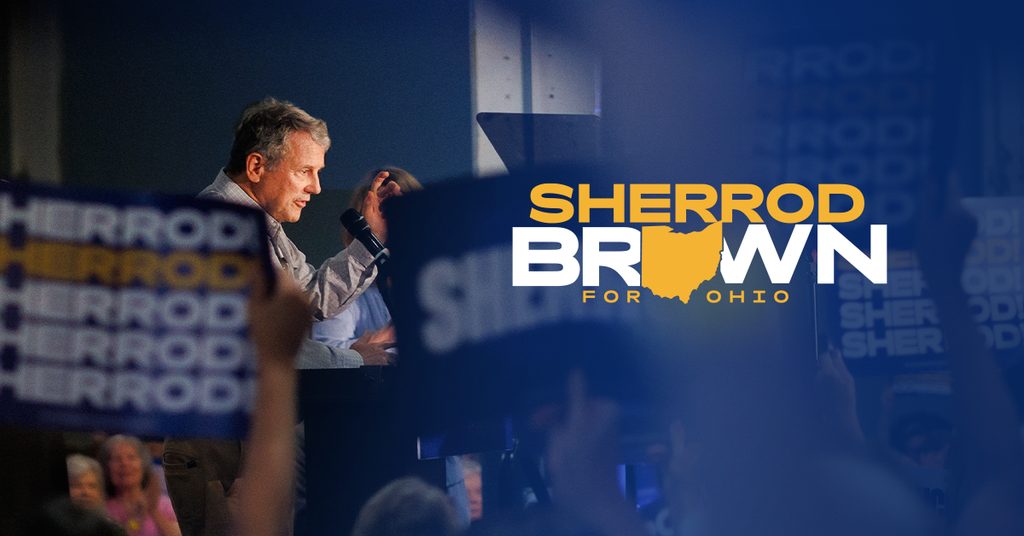
Election-night update — Nov. 3, 2026
In the Associated Press returns displayed by Fox News at 7:49 p.m. Eastern, Sherrod Brown had 428,589 votes (63.55%), Jon Husted 225,456 (33.43%), William Redpath 10,601 (1.57%) and Greg Levy 9,753 (1.45%). The feed displayed 13.84% reporting. That is the source’s reported completion measure, not a certified count of every ballot; totals and percentages can change.
Early-vote context: AP’s Ohio reporting guide says counties generally release early and absentee results first. An exact statewide share of reported ballots cast early was unavailable in the checked returns. In Hamilton County’s official report updated at 8:01 p.m., all 119,741 reported Senate votes were classified as Early, with zero Election Day votes. That county-only breakdown must not be treated as the statewide mix. The returns are unofficial and establish no winner.
Former U.S. Sen. Sherrod Brown, a Democrat, is seeking a return to the Senate in Ohio’s Nov. 3, 2026, special election.
The official statewide ballot directive lists Republican Jon Husted, Democrat Sherrod Brown, Libertarian William B. Redpath and Greg Levy, whose ballot designation is “Other-party candidate.” The current county certified list also includes qualified write-in candidates. The contest is for the remainder of a term ending Jan. 3, 2029.
Experience and education
The congressional biographical record dates Brown’s Senate service from Jan. 3, 2007, to Jan. 3, 2025. He was elected in 2006; he did not begin serving that year. He chaired the Banking, Housing and Urban Affairs Committee during the 117th and 118th Congresses.
Brown previously served in the Ohio House from 1975 to 1982, as Ohio secretary of state from 1983 to 1991, and in the U.S. House from 1993 to 2007. The congressional record lists a 1974 Yale bachelor’s degree and a 1981 Ohio State master’s degree. He lost his 2024 Senate reelection bid.
On the issues
Brown’s current campaign platform focuses on household costs and government accountability.
- Health insurance: He proposes barring insurers from denying care prescribed by a doctor and imposing fines for denials.
- Prescription drugs: He wants drugmakers barred from charging Americans more than customers in other countries for the same medication.
- Data centers: He supports requiring developers to cover their full utility costs and giving communities a say in local projects.
- Utility bills: He advocates limits on rate increases.
- Congressional ethics: He supports banning stock trading by members of Congress and their spouses and preventing former members from becoming lobbyists.
These are Brown’s campaign proposals, rather than descriptions of laws already enacted.
Brown did not return this outlet’s candidate questionnaire. This profile draws on certified election records, the congressional biography and his current campaign platform.